The University made important progress towards its institutional goals in 2025 - the first full year under our Strategic Plan 2030 - as we continued to grow our reputation as a centre of dynamic learning and innovative world-leading research.
We were proud to be placed among the world’s top 200 institutions for our contribution to meeting the United Nations Sustainable Development Goals, and to be recognised by the International Student Barometer as having the best campus environment and sports facilities in the UK, with both also ranked in the top 10 globally. The sector-leading survey also praised our social activities, careers network, library, and inclusive campus community.
This recognition is a result of our ongoing commitment to ensuring that we remain a leading destination for prospective students globally. In 2025, our student population stood at 17,500, with more than 140 nationalities represented on campus.
We were honoured to be chosen as the first host in the UK for an exhibition curated by The Nagasaki National Peace Memorial Hall for the Atomic Bomb Victims – on the 80th anniversary of the bombing of Hiroshima and Nagasaki. The exhibition was officially opened by His Excellency Mr Hiroshi Suzuki, Japanese Ambassador to the United Kingdom.
The visit was one of several high-profile delegations we welcomed to the University in 2025, with First Minister John Swinney visiting the Art Collection; His Excellency Mr Iain Frew, Britain’s Ambassador to Vietnam, visiting the Institute of Aquaculture; and Kirsty McNeill MP, Parliamentary Under-Secretary of State for Scotland, visiting our sports facilities.
We were accredited as a Living Wage employer, reflecting our commitment to fair pay, and celebrated our Division of Biological and Environmental Sciences achieving the Athena Swan Silver award for advancing equality, diversity and inclusion. The University also won a prestigious Universities Human Resources award for sector-leading work on academic promotions.
Read more
Student achievements
Our talented students received important recognition across the year - for their coursework, research and extracurricular activities, and for using their skills and knowledge to make a tangible difference to the world.
With more than 4,000 work-ready graduates celebrated at our graduation ceremonies - both at our Stirling campus and at our international teaching sites, alongside nine inspirational honorary graduates, we were proud to see our Stirling family grow to more than 115,000 alumni.
In other highlights, sports scholar Gabriella Wood met King Charles as she helped launch the Commonwealth Sport King’s Baton Relay at Buckingham Palace; history student Hayley Melrose was named a National Lottery Game Changer for her voluntary work with the Eco-Museum of Scottish Mining Landscapes; and our film and media students won two awards at the Royal Television Society Scotland Student Television Awards.
Our sports clubs and societies raised a remarkable £52,264 for men’s health charity Movember, with Stirling one of the UK’s best performing universities in the charity challenge.
Advancing learning
We continued to broaden and enhance opportunities for students to develop their skills as part of their degree, alongside industry experts and through pioneering projects.
Highlights included the University becoming the first in the UK to include dementia design teaching for undergraduate nurses and paramedics; the launch of the student-led University of Stirling Human Rights Journal, which aims to shape global policy; and our BA Film and Media students being commissioned to produce two documentaries for BBC Disclosure.
We welcomed leaders from FIFA, Formula 1 and the Commonwealth Games to our International Events Symposium, and our Master of Public Health students prepared for future global health crises with an immersive emergency simulation on campus.
Sporting triumphs
We are Scotland’s University for Sporting Excellence, and throughout 2025 our athletes continued to compete – and excel – at the highest level.
Ten Stirling swimmers competed at the World Aquatics Championships, with Duncan Scott and Jack McMillan winning gold, while Olympic champions Tom Dean and Freya Anderson joined our coveted high-performance programme.
Duncan, Jack, Tom and Freya, as well as Head Performance Swim Coach Ben Higson, were winners at the Aquatics GB Awards, and Duncan – Scotland’s most decorated Olympian – became the first Team Scotland swimmer to secure his place at the 2026 Commonwealth Games.
In golf, our Head Coach Dean Robertson captained Great Britain and Ireland at the coveted Walker Cup, scholar Ross Laird won the Arnold Palmer Cup, and we further enhanced our high-performance programme with the opening of a state-of-the-art indoor golf studio.
Tennis scholar Anna McBride claimed her third consecutive women’s singles title at the Australian Open’s Intellectual Disability Championships, while triathletes Millie Breese and Alex Robin won World Championship gold with Great Britain, with Robin also joining the British Triathlon Olympic World Class Programme.
We marked the 50th Dumyat Hill Race with a special reception of alumni, staff and friends of the University, and strengthened our rugby programme by appointing former British and Irish Lion Allan Dell as Performance Consultant, which sees him lead a new strategic partnership with Stirling County to attract and develop young talent in the city.
Impactful research
Throughout 2025, our researchers embraced a mission-driven, collaborative approach to tackling some of the world’s most complex challenges. This year brought major progress across projects, from health and social care to environmental sustainability and heritage.
The University’s world-leading Institute for Social Marketing and Health was designated a World Health Organization Collaborating Centre on Alcohol Policy and Public Health Research, becoming the UK’s only alcohol policy focused facility. Their colleagues in the Faculty of Health Sciences and Sport also proposed an innovative breast cancer screening pathway and outlined the impact of alcohol-related callouts on ambulance staff.
A Social Sciences study on Scotland’s most vulnerable children was named Research Project of the Year at The Herald Higher Education Awards, and our experts continued to lead the way in shaping the future of education and housing policy.
Our Natural Sciences researchers cultivated the first truffle to be grown on a UK island, revealed sunscreen’s hidden threat to marine ecosystems, and secured UK Space Agency funding for an international project monitoring water quality from space.
In the Faculty of Arts and Humanities, academics shed new light on the fate of Stone of Destiny fragments, explored the protection of Ukraine’s cultural heritage, and warned of democratic backsliding in the UK.
And research from University of Stirling Business School found that gold is losing its lustre as a safe investment, illustrated the changing shape of Scotland as more towns develop, and provided insight into the role game theory plays in football penalty kicks.
We were proud to have four academics appointed to Research Excellence Framework subpanels, where they will provide specialist guidance and assess research performance in UK higher education as part of the next assessment cycle in 2029.
International activity and partnerships
Internationalisation remains a vital strategic focus for the University. Throughout the year, we strengthened global collaborations – enhancing partnerships, expanding transnational education, and working collaboratively on major research projects.
We celebrated the first 174 graduates from our Joint Education Institute partnership with Chengdu University in China, where more than 1,000 students are now enrolled on Stirling College, Chengdu University programmes. A record 175 students also celebrated their achievements after graduating from our longstanding partnership with the Singapore Institute of Management, and 80 from our centre in Ras al Khaimah, United Arab Emirates.
There was also a milestone for our pioneering Doctor of Management degree, delivered in partnership with the University of the Chinese Academy of Social Sciences, with Dr Yong Wang, the first graduate of the programme, attending our summer graduation ceremonies.
Projects under the Stirling and Clackmannanshire City Region Deal continue to progress. Our National Aquaculture Technology and Innovation Hub, funded through the Deal, neared completion and will be fully operational in 2026. Meanwhile, the Forth Climate Forest - an initiative hosted by Scotland’s International Environment Centre - has leveraged additional Scottish Government funding to support its ambitious plan to plant millions of trees across the Forth Valley.
Sustainability and the future
We were proud to be placed in the top 10% of universities globally for our contribution to meeting the United Nations Sustainable Development Goals.
Stirling was ranked top 100 in the world for our contribution to SDG 2 (Zero Hunger), SDG 10 (Reduced Inequalities), SDG 14 (Life Below Water), and SDG 15 (Life on Land).
We are working to make our campus more sustainable, and over the past year major upgrades were completed at our HH Donnelly House and Muirhead House student accommodation - modernising the buildings, improving energy efficiency and supporting our drive towards achieving net zero by 2040.
I am proud of everything that our community has accomplished in 2025, and the University is well positioned to build on this success moving forward.
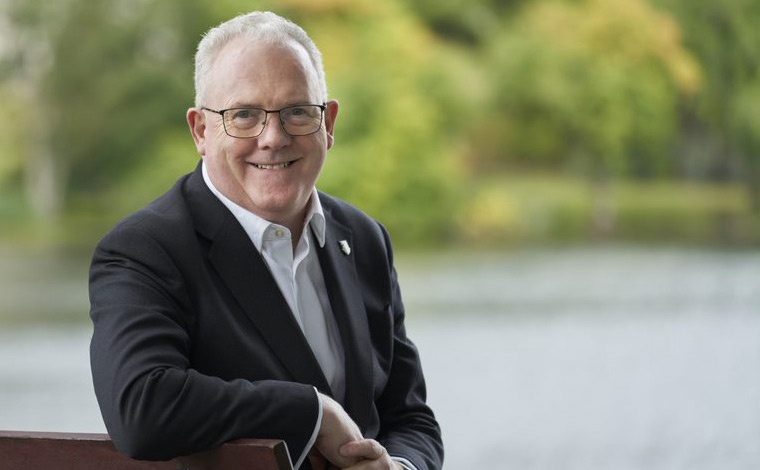
Professor Sir Gerry McCormac
Principal and Vice-Chancellor
University of Stirling

/filters:format(webp)/prod01/cdn/media/stirling/about-us/annual-review/annual-review-2025/annual-review-2025.jpg)
/filters:format(webp)/filters:no_upscale()/prod01/cdn/media/stirling/about-us/annual-review/annual-review-2025/PaulThomas578X358.jpg)
/filters:format(webp)/filters:no_upscale()/prod01/cdn/media/stirling/about-us/annual-review/annual-review-2025/james-naismith-basketball-578X358.jpg)
/filters:format(webp)/filters:no_upscale()/prod01/cdn/media/stirling/about-us/annual-review/annual-review-2025/permanently-progressing-award-578X358.jpg)
/filters:format(webp)/filters:no_upscale()/prod01/cdn/media/stirling/about-us/annual-review/annual-review-2025/destiny-of-stone-578X358.jpg)
/filters:format(webp)/filters:no_upscale()/prod01/cdn/media/stirling/about-us/annual-review/annual-review-2025/Beaver-Foraging-578X358.jpg)
/filters:format(webp)/filters:no_upscale()/prod01/cdn/media/stirling/about-us/annual-review/annual-review-2025/gold-bars-578X358.jpg)
/filters:format(webp)/filters:no_upscale()/prod01/cdn/media/stirling/about-us/annual-review/annual-review-2025/rynok-square-578X358.jpg)
/filters:format(webp)/filters:no_upscale()/prod01/cdn/media/stirling/about-us/annual-review/annual-review-2025/drug-clinical-trial-578X358.jpg)
/filters:format(webp)/filters:no_upscale()/prod01/cdn/media/stirling/about-us/annual-review/annual-review-2025/history-teachers-578X358.jpg)