
Lowering deer densities can help restore Scotland's lost Highland mountain woodlands, new research shows
A six-year long Stirling-led study looked at the impact of deer management on mountain woodland
/filters:format(webp)/filters:no_upscale()/prod01/cdn/media/stirling/news/news-centre/2026/jan-26/1200X630DwardBirch.jpg)
Lost mountain woodlands in the Scottish Highlands will return if deer densities are reduced, according to new University of Stirling research.
A six-year study, led by PhD researcher Sarah Watts of the University’s Faculty of Natural Sciences, looked at the impact of deer management on mountain woodland.
Mountain woodland provides a range of benefits including slope stabilisation, protection from extreme events such as landslides and rockfalls, and a reduction in downstream flooding.
The study, which was supported by Forest Research, focused on dwarf birch, an upland species that, in Britain, is largely confined to blanket bogs - areas not normally associated with trees. Elsewhere in Europe it can be found across a much broader range of locations including grasslands, heaths, and mountain woodlands.
With red deer densities above three per km², the research found dwarf birch planted in grassland and heath habitats suffered increased mortality linked to substantially more browsing - where deer feed on woody vegetation such as leaves, twigs, and buds. In contrast, the trees in blanket bogs were browsed less and experienced far higher survival rates.
Restoration
However, at lower deer densities, without the pressure of overgrazing, dwarf birch survival was similar across all three habitats - with some growth measurements better in the grass and heath than in bogs.
Lead author Sarah Watts now hopes that the study’s findings will help to restore lost woodlands in Scottish mountains - and shape future woodland creation strategies.
She said: “These findings show that blanket bog is a refuge where populations of dwarf birch have escaped overgrazing, rather than providing the ideal conditions for planting and restoration action.
“This means that Scotland’s lost mountain woodlands can return more widely if deer densities are reduced.
“Instead of being an unspoilt wilderness, the Highlands have been influenced by people for thousands of years. Scotland has some of the highest deer densities in Europe, due to management for sport shooting and the removal of top predators such as wolves and lynx.
“National deer density targets are currently set at 10 per km² across open range areas of the Highlands, but numbers vary locally from below one to over 64 per km². These figures are too high for the restoration of sensitive upland habitats such as woodlands and scrub.
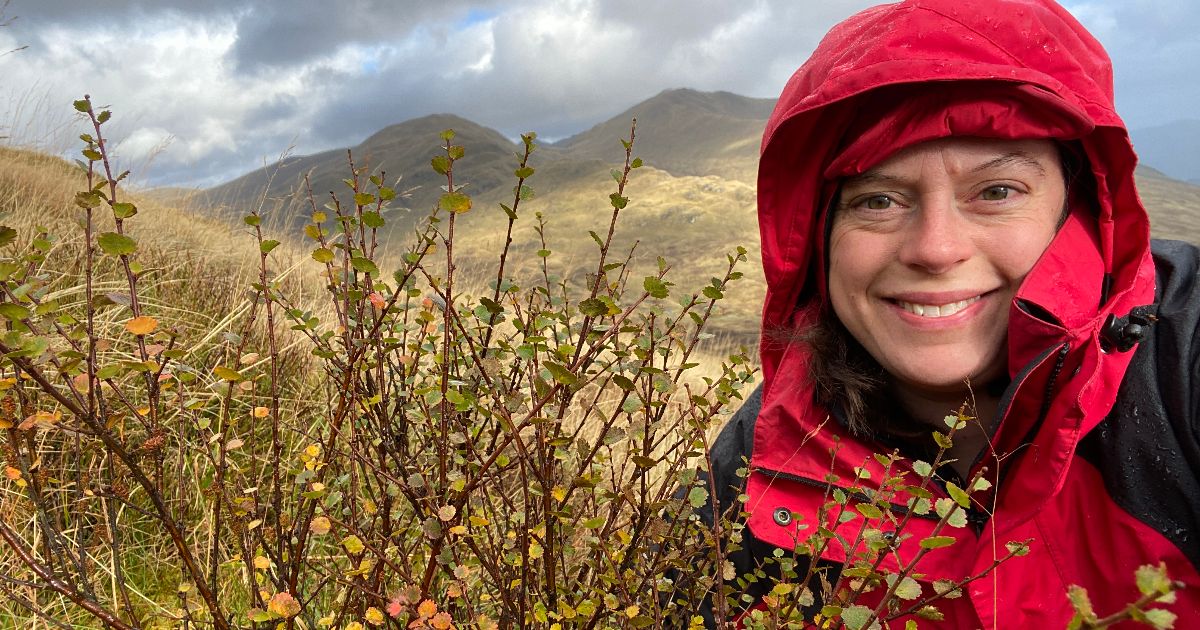 Study lead Sarah Watts of the University of Stirling's Faculty of Natural Sciences.
“Deer are an essential, celebrated part of our natural and cultural heritage. But action to address this imbalance would promote more sustainable, healthy deer populations, facilitate the recovery of other iconic woodland habitats, such as Caledonian Pinewoods and Atlantic Rainforests, and boost the general condition and diversity of our uplands.”
The research involved a six-year long high-altitude tree planting experiment repeated at three upland sites in the Scottish Highlands that are managed for nature restoration: Ben Lawers National Nature Reserve (National Trust for Scotland), Corrour Estate, and Glen Finglas (Woodland Trust Scotland).
In total 750 Dwarf Birch trees were planted in three different habitat types: blanket bog, upland grassland and heathland, and in different grazing management treatments ranging from total exclusion of large herbivores, to low deer densities (between 1-3 per km²), and higher deer densities of seven per km².
Study co-author Dr Nadia Barsoum, Senior Biodiversity Scientist at Forest Research, explained: “Our native shrub and tree species have evolved and adapted to specific environmental conditions over millennia, making many of them specialist survivors able to thrive where other species cannot. Uniquely placed then are these species to deliver ecological and ecosystem benefits in these contexts like no other. Giving ‘space for nature’ in the case of dwarf birch has a tangible remedy as this study demonstrates.
"Deer management will allow this native tree species to escape the confines of their final refugia and reclaim large areas of the Highland uplands, bringing back all the evolved benefits that have been lost.”
Refugia are areas that enable species to survive long-term during large-scale environmental changes, while refuges are places offering short-term protection from more immediate threats.
Measurements of survival, browsing and growth were recorded twice a year at each site, amounting to over 40,000 individual measurements, all made by Watts during her PhD studies.
Thinking outside the bog
Ms Watts added: “Tree planting is best targeted in suitable habitats when seed sources for natural regeneration are lacking. However, it is necessary to address the original causes of habitat loss, particularly overgrazing, with landscape-scale management for a lower density red deer population (below three per km²) being key to facilitating the recovery of mountain woodland. We therefore need to increase rural employment and promote the value of jobs such as deer stalking for supporting nature recovery.
"Dwarf birch regenerates particularly well in heathlands without the pressure of overgrazing, but such mountain woodlands are exceptionally rare in our Highland landscapes shaped by centuries of land-use and grazing management. These habitat mosaics are not typically recognised in protected areas or conservation policy.
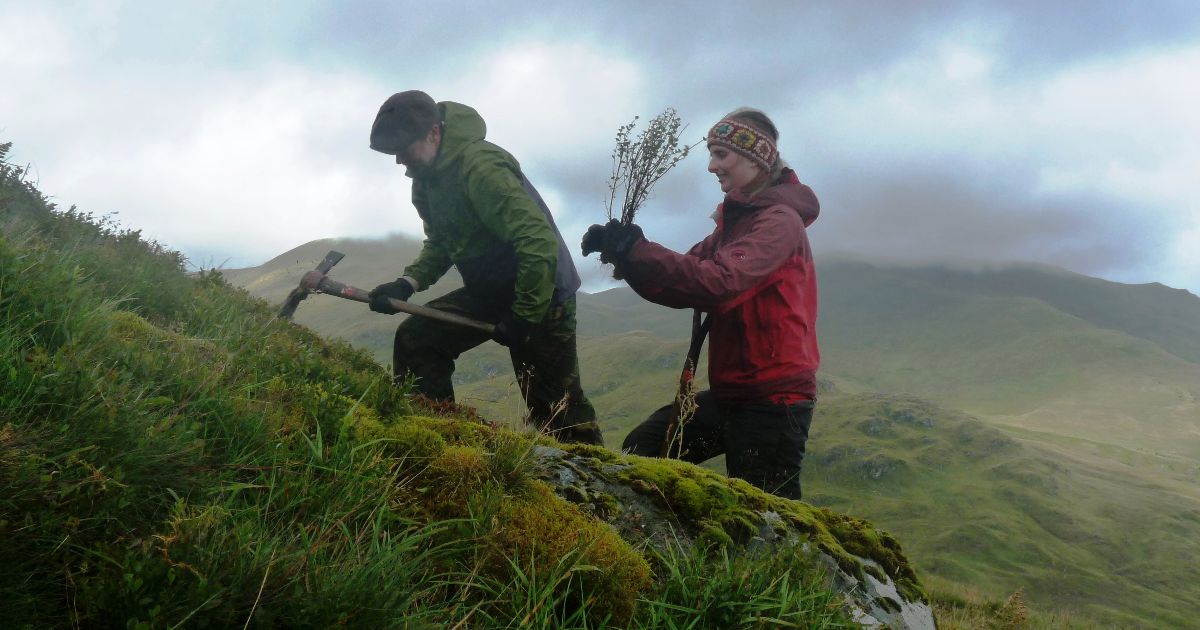 Dwarf Birch planting at Ben Lawers National Nature Reserve (Credit: National Trust for Scotland)
“Our research illustrates the value of an outside the box, or in the case of dwarf birch, thinking outside the bog, approach to conservation management - encouraging us to work outside of habitat refugia, small tree planting projects constrained within fences, and static vegetation categorisations which omit mountain woodland mosaics.
“Reviving mountain woodland mosaics will tackle biodiversity loss and help mitigate climate change impacts on a national scale.”
The study Thinking outside the bog: Planting Dwarf Birch (Betula nana) for mountain woodland restoration beyond habitat refugia constrained by overgrazing was published in the journal Forest Ecology and Management.
Work was funded by the University of Stirling, Woodland Trust Scotland, Corrour Estate, Scottish Forestry Trust, Macaulay Development Trust, National Trust for Scotland, Forest Research, and Future Woodlands Scotland.
UN Sustainable development goals
The University of Stirling is ranked among the top 200 institutions in the world for its contribution to meeting the United Nations Sustainable Development Goals (SDGs). The research or activity detailed above relates to the following SDGs.

